Encephalartos dolomiticus
Encephalartos dolomiticus, or the Wolkberg cycad, grows on dolomite rock formations in the Tzaneen region of the Transvaal. It was discovered in 1971 and later recognized as a distinct species in 1988. This species grows at altitudes around 1,200 meters and shares its habitat with notable plants like Aloe lutescens.
Cones
E. dolomiticus rarely produces cones. Female cones are single, large, and glaucous-green, measuring around 12-16 cm in diameter. They remain hidden among dense, woolly bracts until they emerge, at which point they measure 45-50 cm in length. Male cones are much smaller and cylindrical, measuring 30-40 cm in length and 5-8.5 cm in diameter. Both male and female cones develop gradually and are borne on short peduncles around 8-9 cm long. The cones are covered in fine woolly hairs, which gradually shed as they mature.
Leaves
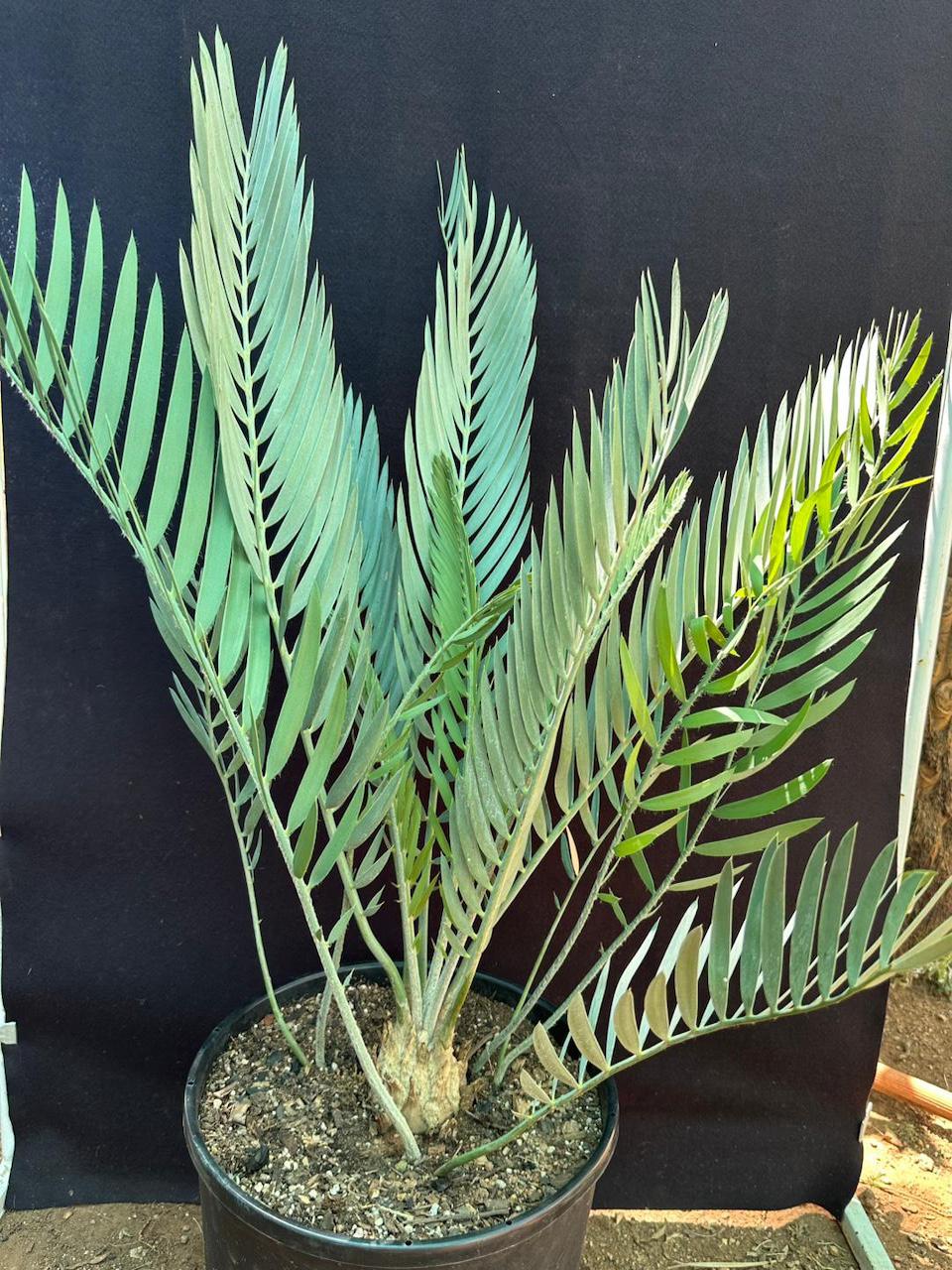
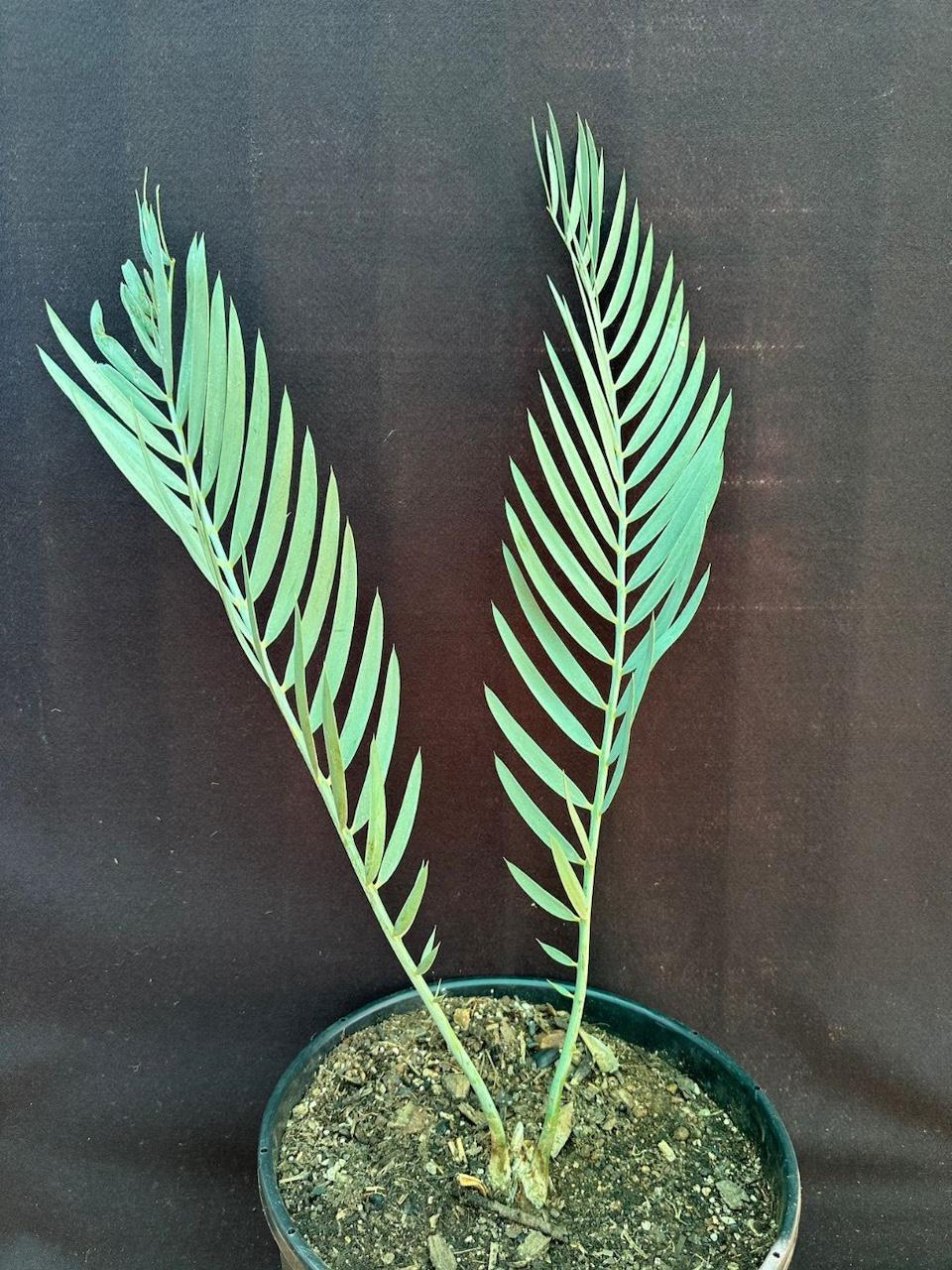
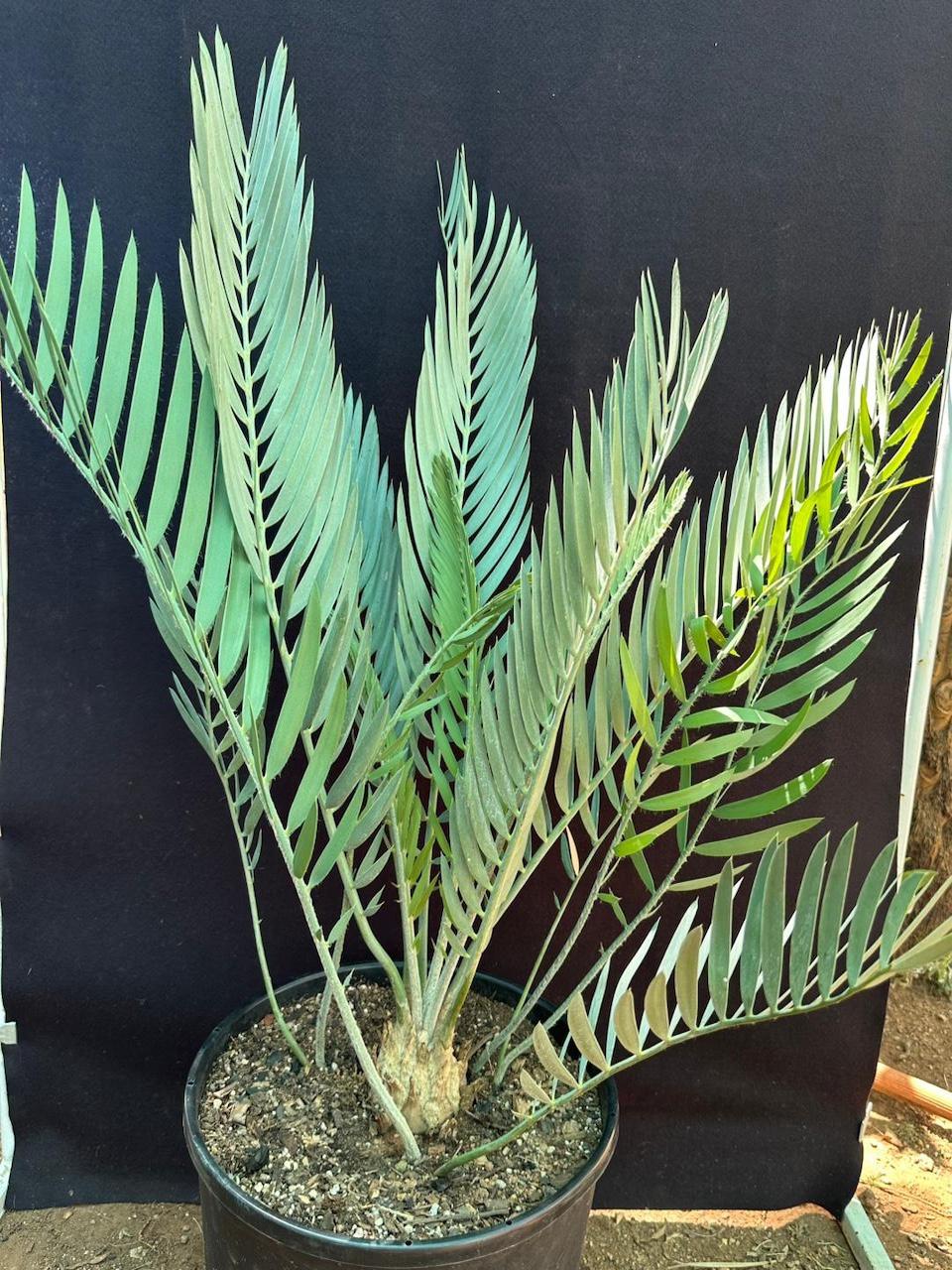
The leaves of E. dolomiticus are 60-80 cm long, twisted, and recurved, with a silvery-grey sheen. When newly sprouted, the leaves are covered in long, fine hairs, which fall off after a few weeks. However, some of the hairs remain attached to the petiole for several months. The median leaflets are sharply pointed, measuring 12-16 cm long. The base of the petiole is 9-14 cm in length and displays a distinct brown “collar” near the crown, adding further protection to the stem.
Stems
The unbranched stems of E. dolomiticus grow up to 1.2 meters in height and 25-30 cm in diameter. These stems are densely covered in thick buff-colored woolly bracts, providing protection from environmental stress. The stems of mature plants may recline over time, creating a distinctive “skirt” around the base of the plant. These bracts increase in number during cone production, forming a dense, woolly covering that remains attached for many years after cone formation.