
Encephalartos senticosus
Encephalartos senticosus, commonly known as the Jozini cycad, is native to the Lebombo Mountains, spanning Mozambique, Eswatini, and South Africa's KwaZulu-Natal province. This species typically grows on rocky slopes and forest ravines or on dry, steep hillsides between boulders and within shrub clumps at altitudes of 300–800 meters.
Cones
Encephalartos senticosus is dioecious, with male and female cones on separate plants. Male plants produce 3–4 narrowly ovoid cones per stem, each measuring 30–50 cm in length and up to 10 cm in diameter. These cones are orange to yellowish-orange and are borne on stalks up to 10 cm long. Female plants yield 2–3 barrel-shaped cones, approximately 45 cm long and 22 cm in diameter, pale yellow in color. The seeds feature a bright red sarcotesta.
Leaves
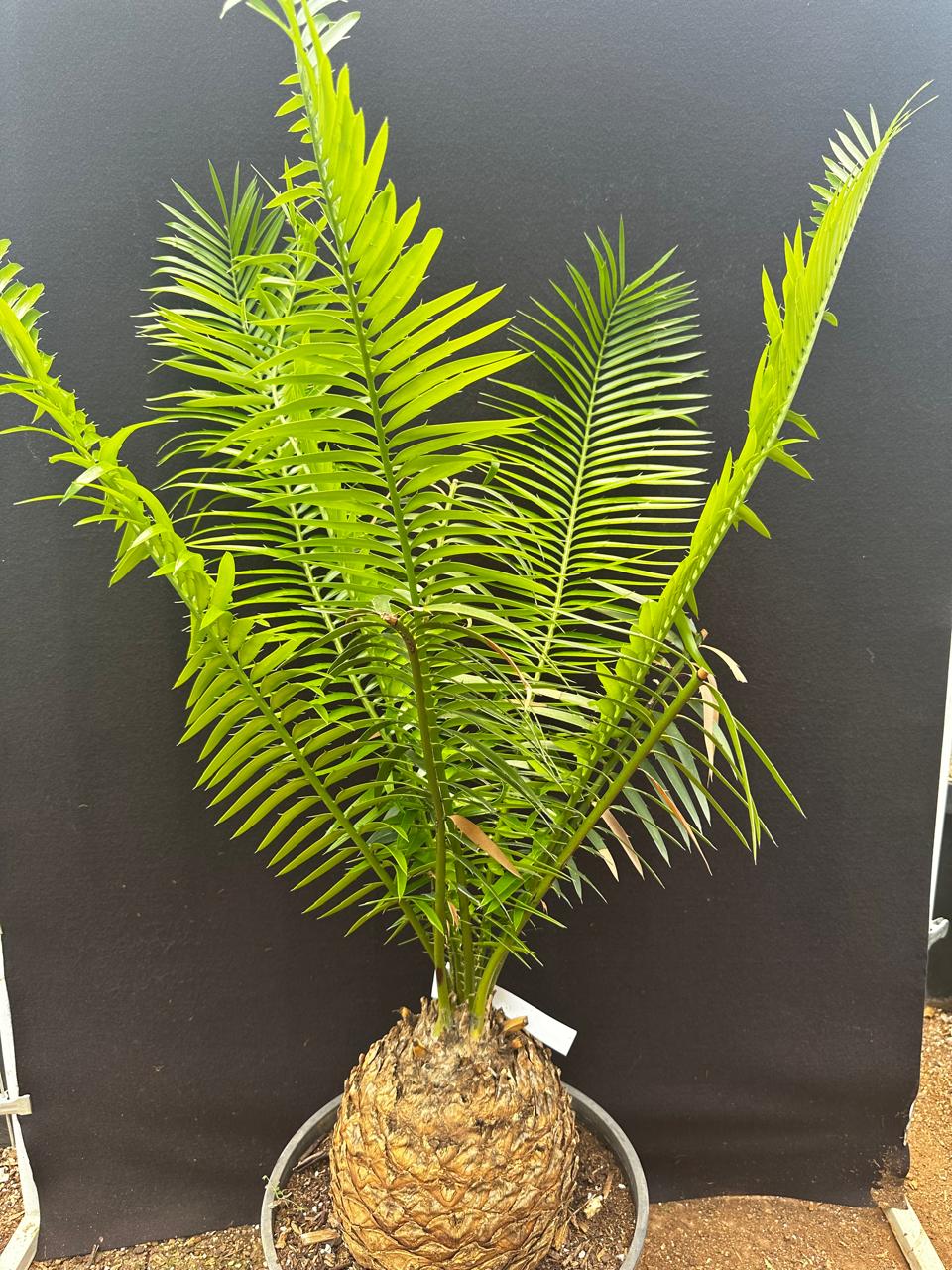
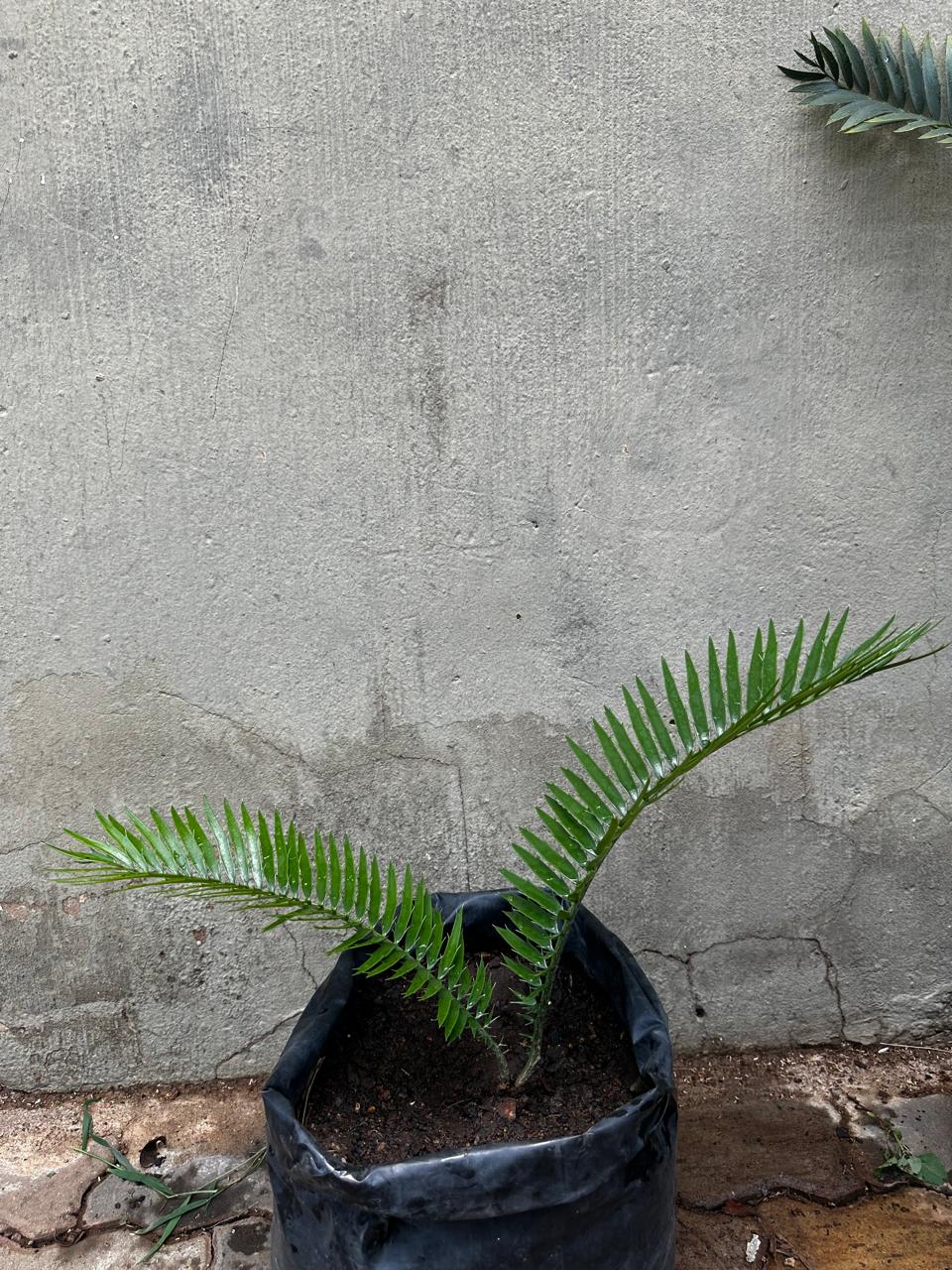
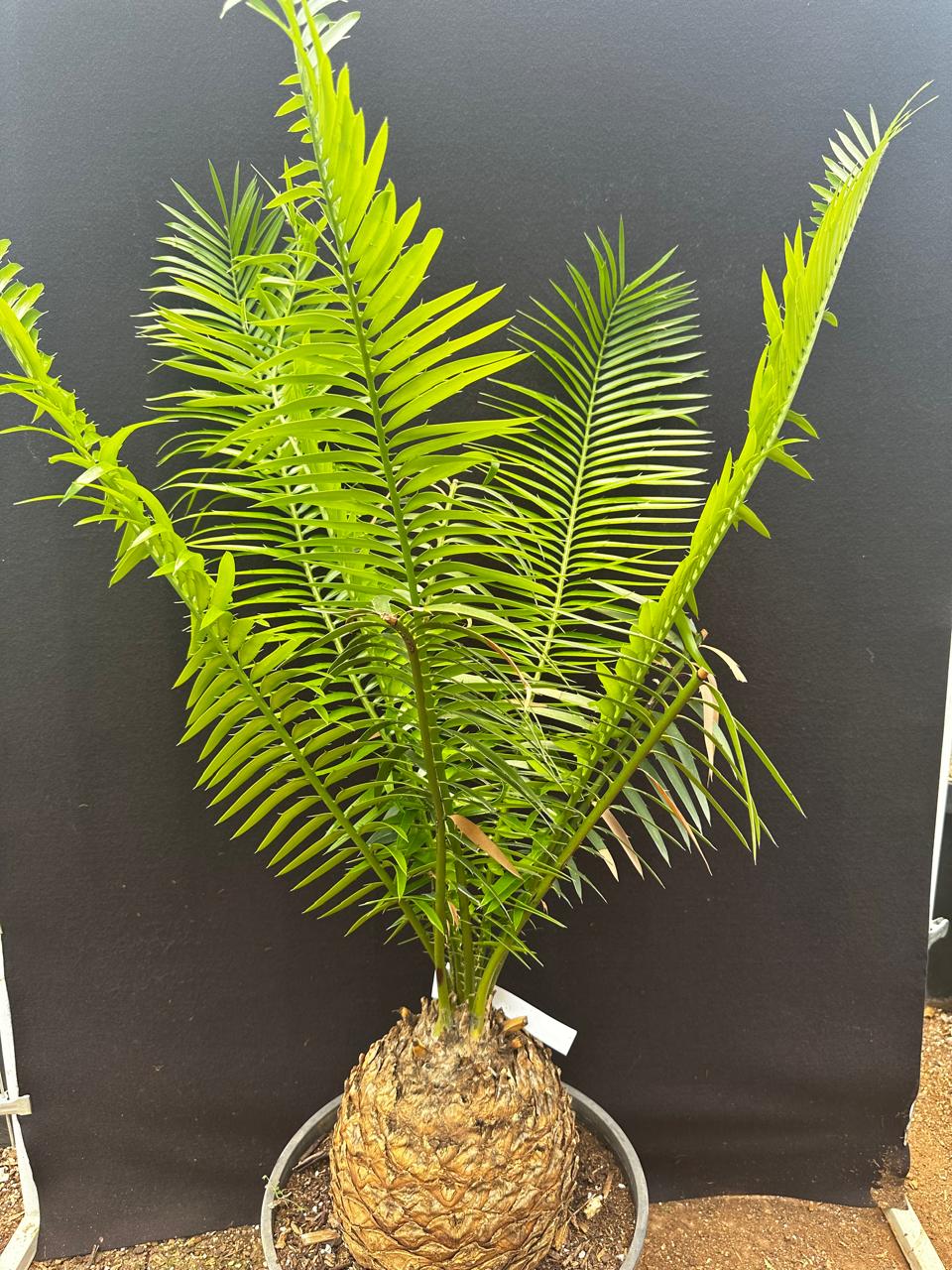
The leaves of E. senticosus are rigid and straight, ranging from 1.1 to 1.8 meters in length, forming a glossy dark green crown. Leaflets are narrowly ovate, measuring 12–18 cm long and 1.4–2 cm wide, with serrated edges. They are arranged oppositely at an angle of about 135°, slanting at 30° from the central rachis toward the leaf tip. The leaflets decrease in size toward the base, with the lowermost reduced to spines.
Stems
E. senticosus features a trunk up to 4 meters tall and 30 cm thick, often suckering at the base to form clumps. The stem is covered with old leaf bases, providing structural support, and has a slightly woolly crown. In its natural habitat, the trunk may be adorned with lichens and mosses, adding to its distinctive appearance. This robust cycad thrives in well-drained soils under full sun or partial shade, making it a popular choice for ornamental gardening.