



Encephalartos natalensis
The Encephalartos natalensis, or Natal giant cycad, is a robust species found in northern Transkei and Natal, growing in rocky and open environments. It is closely related to E. altensteinii but was classified as a separate species in 1951. It displays a wide range of foliage and cone variations.
Cones
Female plants of E. natalensis produce 3-4 cones per crown, which are egg-shaped, golden-yellow, and reach 50-60 cm in length and 25-30 cm in diameter. The cones have a soft, smooth surface and are covered in brown wool, which gradually falls off as they mature. Male cones are cylindrical and slightly smaller, measuring up to 45 cm in length. Seeds are orange-yellow and covered in fine hairs. The cones of this species are known for their variable size and shape across different regions.
Leaves
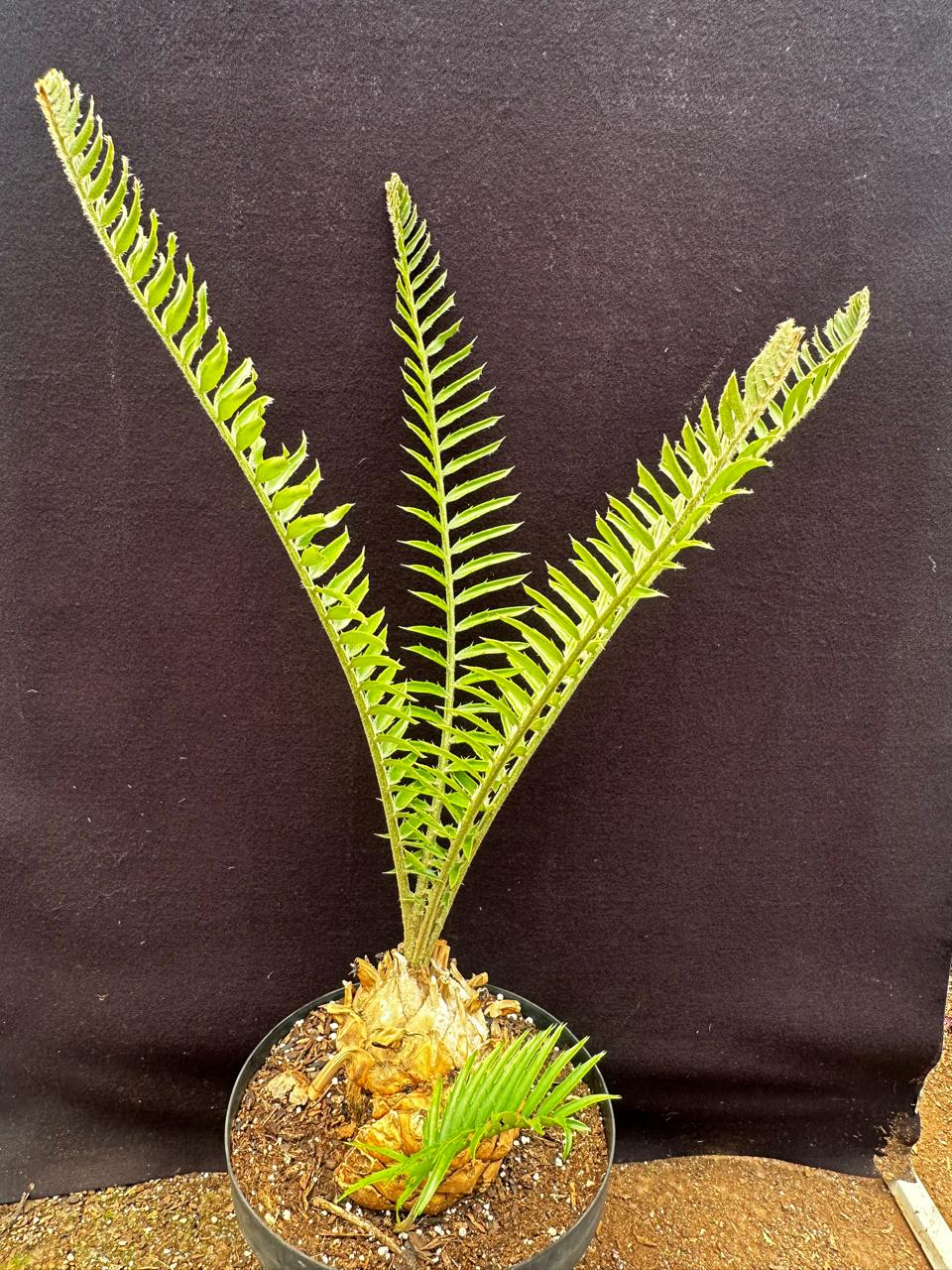
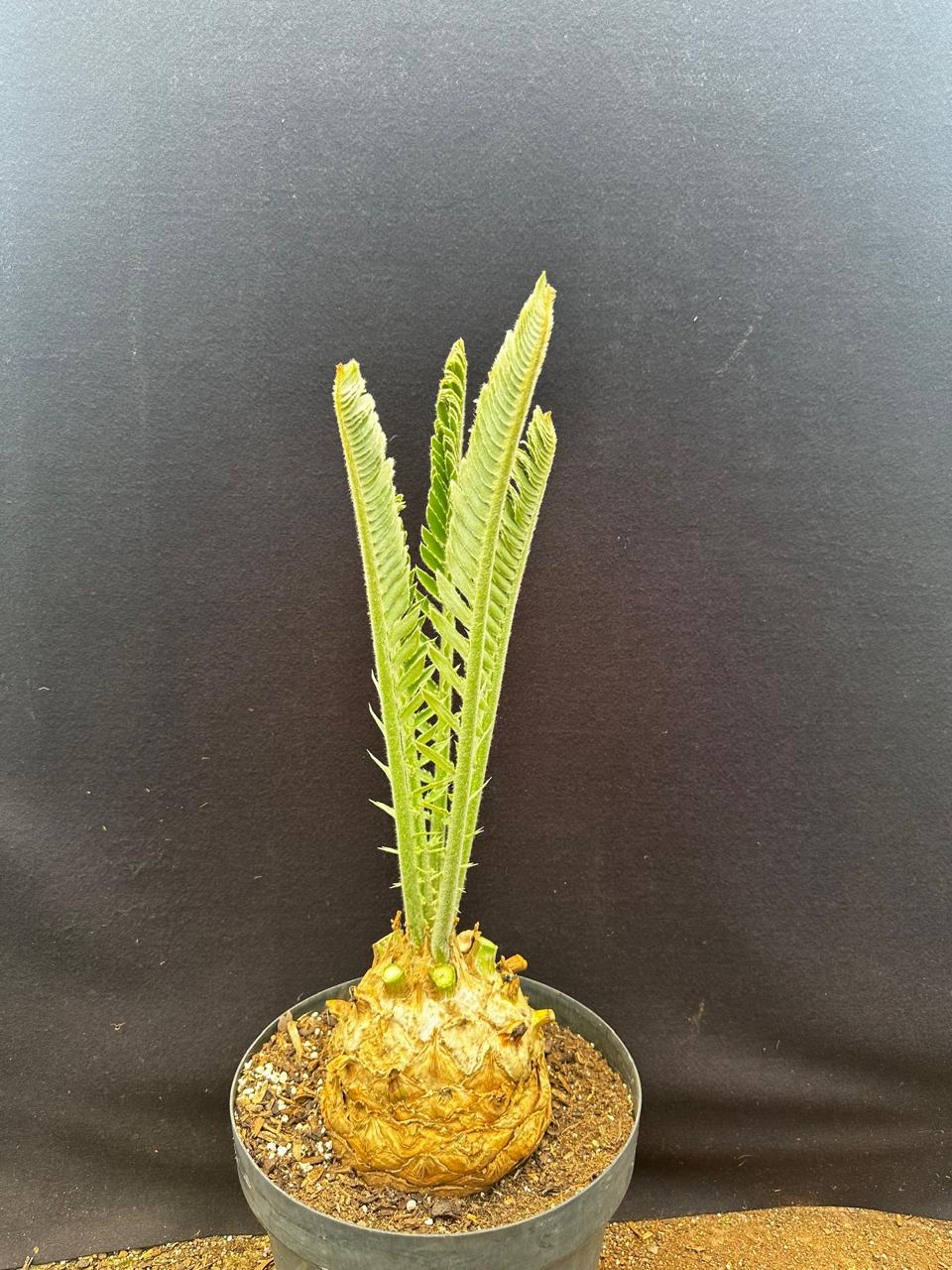
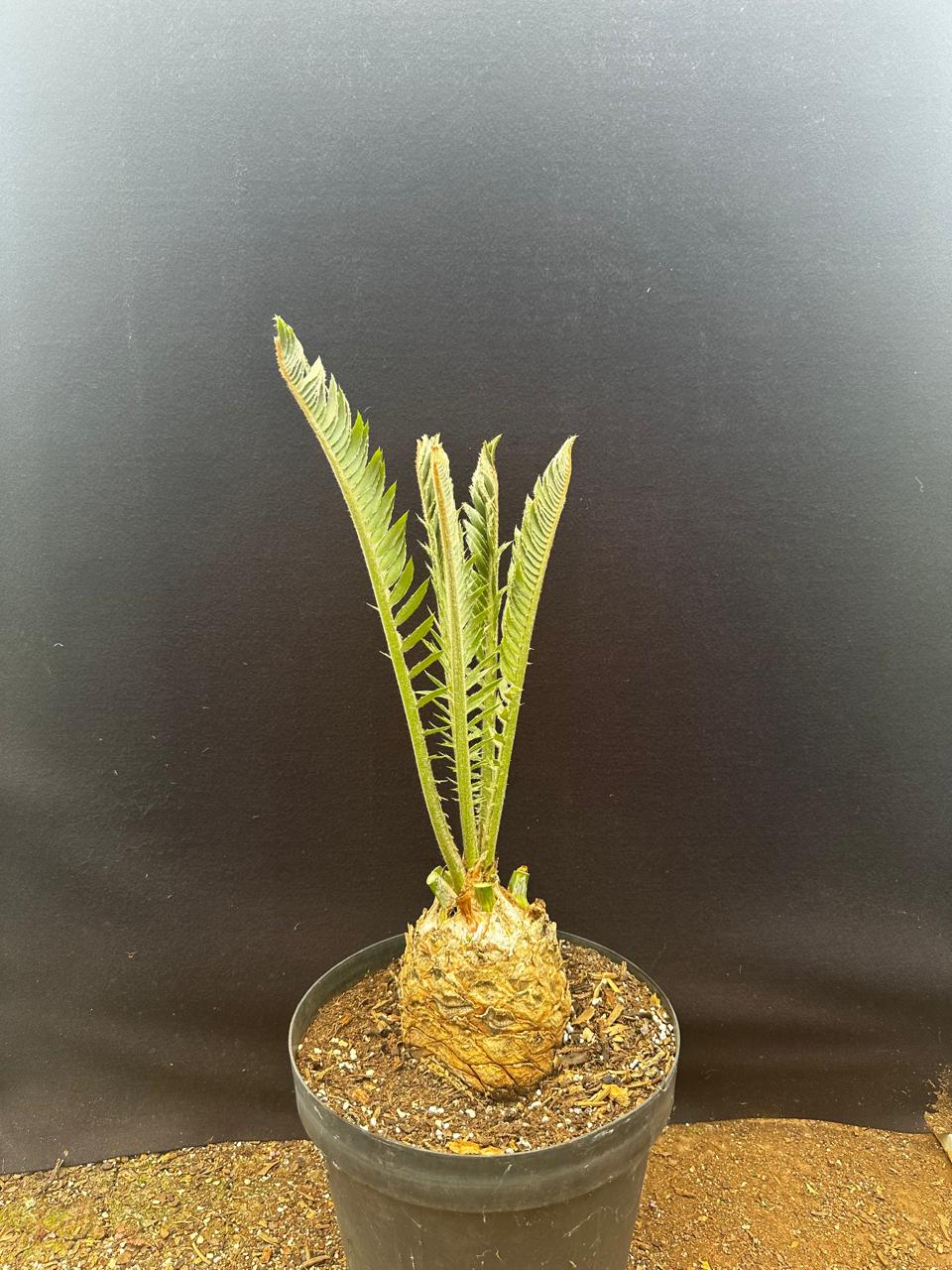
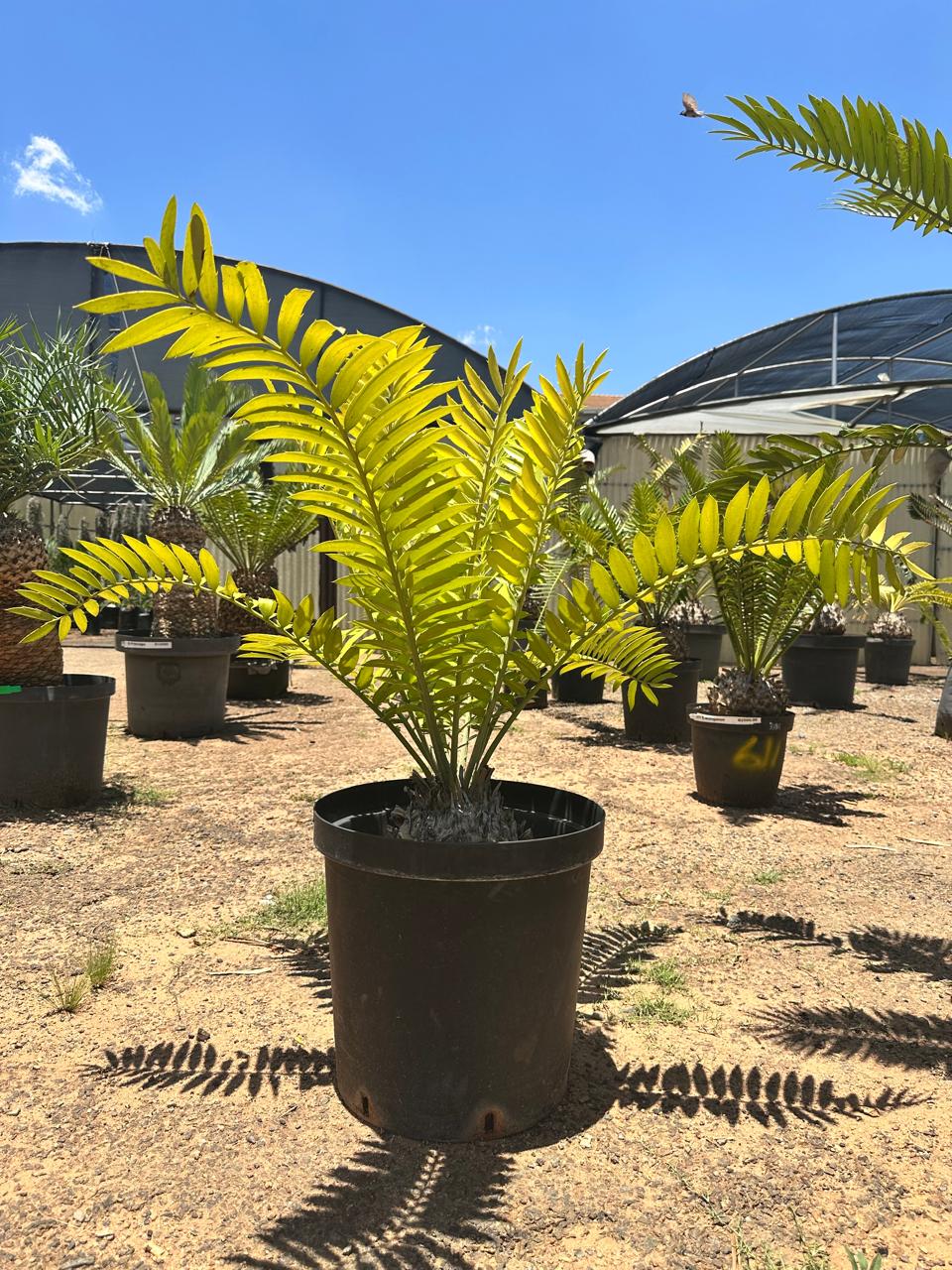
The leaves of E. natalensis are glossy green and can reach lengths of 1.3 to 3.3 meters. They arch gracefully but may occasionally twist near the apex. The leaflets are straight and leathery, with 1-3 teeth on each margin. The leaves are densely packed along the rachis, with new growth covered in a layer of fine, golden hairs. In some areas, the foliage takes on an umbrella-like shape, providing protection from the sun. The leaves are resilient and adapt to different environmental conditions.
Stems
The stems of E. natalensis can grow up to 6 meters in height, and they frequently branch out from the base. These plants are typically single-stemmed, with associated suckers near the crown, and are densely packed with golden-brown wool, especially near the apex. In certain environments, stems may reach lengths of 4 meters and have diameters up to 40 cm. When older, the crown becomes loosely packed with bracts, allowing cones and leaves to develop more easily in its structure