Encephalartos villosus
Encephalartos villosus is one of the most widespread cycads in southern Africa, commonly found from the Eastern Cape Province to northern Natal, Swaziland, and beyond. Known as the "poor man's cycad," it is popular in cultivation due to its resilience and adaptability, thriving in a variety of habitats.
Cones
The cones of Encephalartos villosus are broadly cylindrical, with female cones reaching 30-50 cm in length and 20-25 cm in diameter. The female cones are pale green when mature, turning golden-yellow or orange, and are borne on a short peduncle. The male cones are smaller, around 15-25 cm long, with pale green to yellow coloring. Both male and female cones are protected by a dense coating of woolly bracts, which fade as the cones mature. Seeds turn bright red, attracting birds for seed dispersal.
Leaves
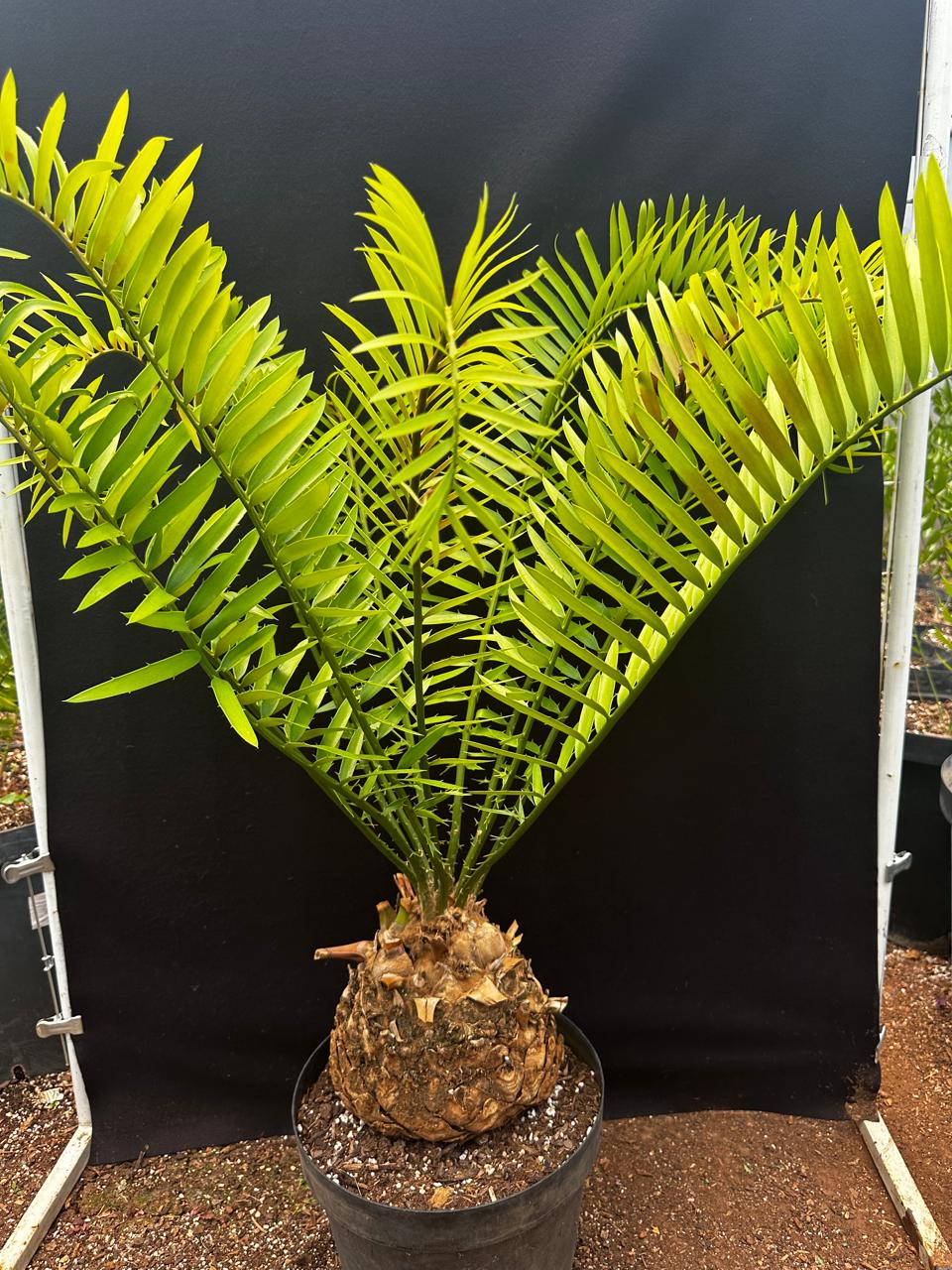
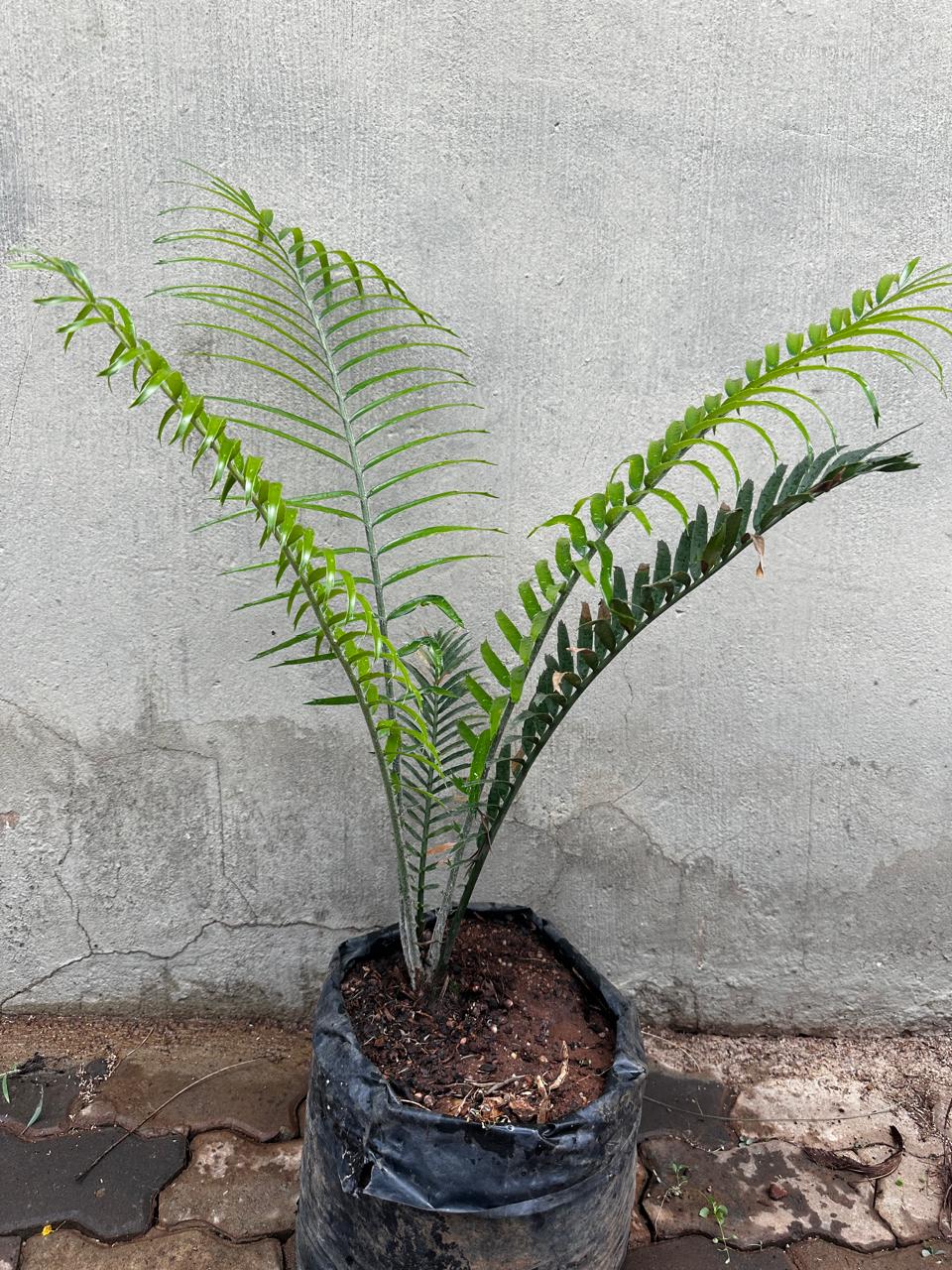
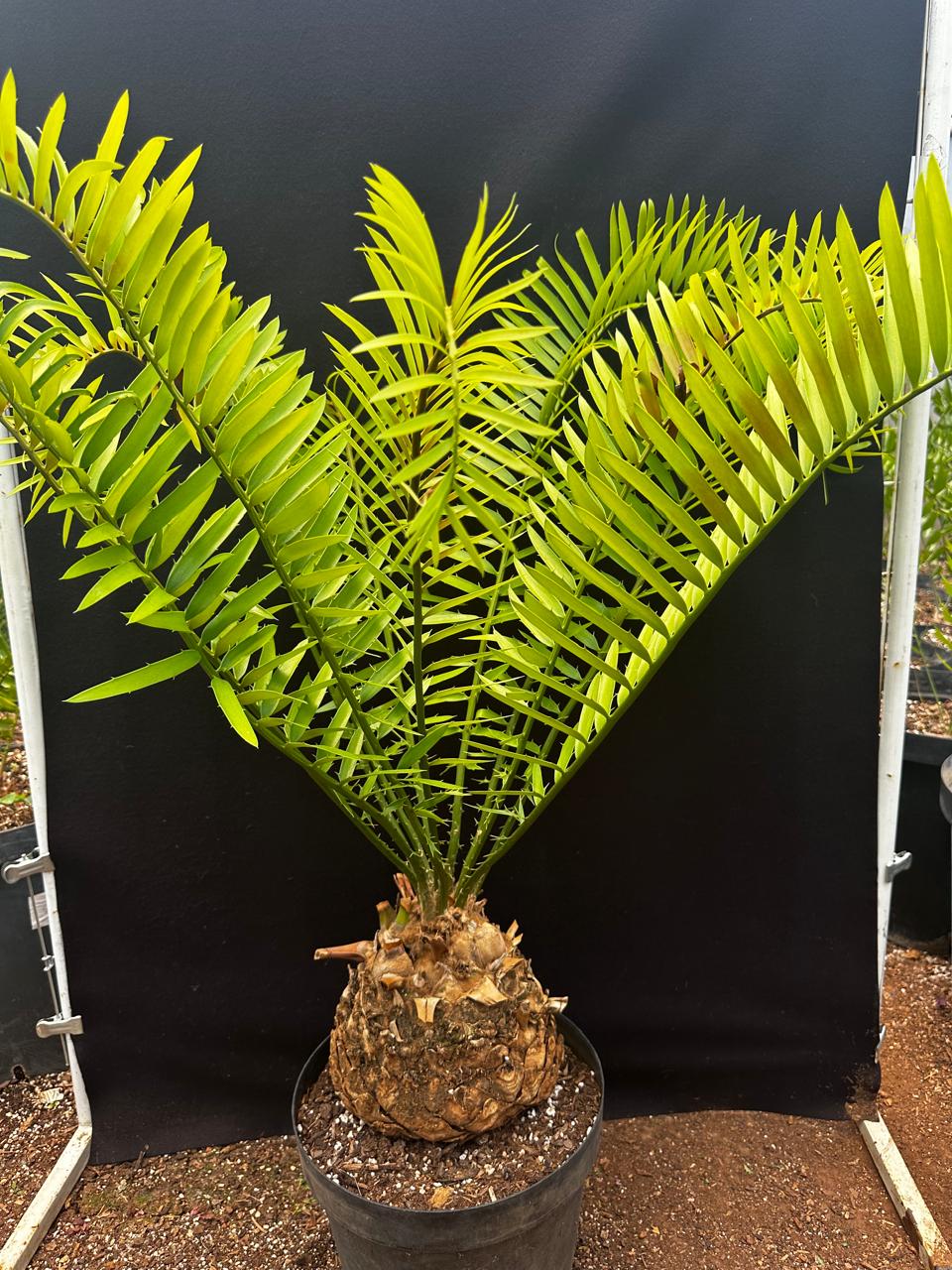
The leaves of Encephalartos villosus are glossy dark green, straight, and spread outward, giving the plant a full, rounded appearance. Each leaf measures 1.2-2.5 meters long, and the leaflets are 15-25 cm long, with well-developed, forward-curving teeth on the lower margins. In plants from the Transkei region, the leaflets typically have 1-2 prominent teeth on the margin. New leaves are covered with fine white hairs that disappear with age. This plant’s foliage provides significant coverage, giving it a distinct, lush appearance as it matures.
Stems
The stems of Encephalartos villosus are mostly subterranean, typically staying below the soil surface with only a small part occasionally exposed. They may branch out or sucker to form clumps. The stems are densely packed with greyish woolly bracts, offering protection to the plant's central tissues. Though usually compact, the underground stems can grow up to 20 cm in diameter. This hidden growth habit allows the cycad to withstand frost and harsh environmental conditions, making it a particularly resilient species.